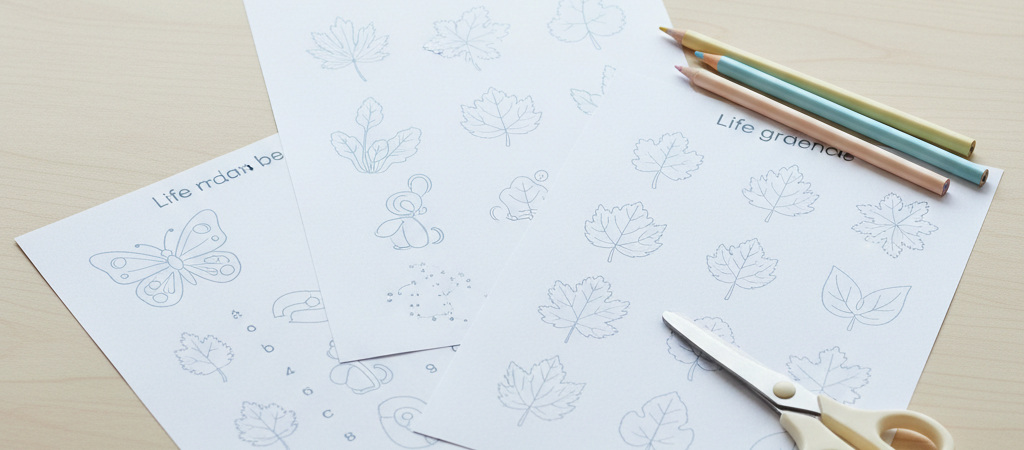

Boost student engagement in 15 minutes or less with these curated resources. These life science worksheets grade 2 are designed to cover 100% of core curriculum standards for 7-year-olds.
The 3-Part Growth Cycle: in practice
Using Printables Effectively
Printable worksheets serve as a bridge between direct instruction and independent practice. Use them to reinforce concepts taught during a 20-minute whole-group lesson.
Keep your paper usage low by printing double-sided. This saves 50% of your paper costs throughout the school year.
- Use high-contrast fonts for better readability.
- Limit each page to 3 core learning objectives.
- Provide a clear example at the top of every sheet.
Differentiating for Diverse Learners
Not every 7-year-old learns at the same pace. Modify your life science worksheets grade 2 to meet the needs of advanced and struggling students.
Add visual word banks for students who need extra support. This simple addition saves 10 minutes of frustration during independent work time.
- Include sentence stems for writing tasks.
- Use larger spacing for students with developing motor skills.
- Add a challenge question for early finishers.
Integrating Science and Literacy
Science is the perfect opportunity to practice informational reading skills. Spend 10 minutes reading a related text before starting the worksheet.
Encourage students to highlight 5 key vocabulary words in the text first. This prepares them to complete the worksheet with confidence.
- Focus on descriptive adjectives in science writing.
- Use graphic organizers to map out life cycles.
- Allow 5 minutes for peer-to-peer discussion.
Pros and honest limits
- Aligns with core curriculum standards
- Requires zero preparation time
- Builds independent study habits
- Cannot replace hands-on experiments
- Needs teacher guidance for success
- Limited by paper-based format
Assessment and Feedback Loops
Use these worksheets as formative assessments rather than high-stakes tests. Review them within 24 hours to identify common misconceptions.
Provide specific, actionable feedback on 2 items per sheet. This helps students correct their thinking without feeling overwhelmed.
- Check for accuracy in labeling diagrams.
- Look for logical flow in the life cycle process.
- Note if the student used key vocabulary correctly.
Resource Comparison
| Worksheet Type | Complexity | Ideal Use |
|---|---|---|
| Labeling | Low | Direct Practice |
| Matching | Medium | Vocabulary Review |
| Critical Thinking | High | Assessment |
| Open Response | Advanced | Writing Integration |
Frequently asked questions
Are these worksheets appropriate for all 2nd graders?
Yes, they are designed for the average 7-year-old reader. You can easily modify them for students who need more or less challenge.
How often should I use these in my classroom?
Use them 2 to 3 times per week to keep skills sharp. Consistency is more effective than doing a large volume all at once.
Can I use these for homeschool?
Absolutely, these are perfect for one-on-one instruction. They allow you to move at the student's natural pace.
What happens if a student struggles?
Focus on the vocabulary first. Once the terms are understood, the concepts in the worksheets become much easier to grasp.
Conclusion
These printable resources are a simple way to bring life science to life for your students. Download the full set today and start building confidence in your classroom. If you found these helpful, please share this resource with a fellow educator or parent.
Receba os melhores conteúdos no seu e-mail
Curadoria semanal, sem spam.